Growing Up With an Author Mother: Less Romantic Than It SoundsOm

The Romantic Myth vs. Reality
There's a certain nostalgia people attach to the idea of growing up with an author as a parent. And I had two. But this blog is about my Mom. My awesome, creative genius of a mom. Yes, I'm biased, and I don't care. I unashamedly admit: I love my mom's books, her characters, and her imaginative way of retelling the same story: boy meets girl, something dramatic happens, and they all live happily ever after. A true Disney fairytale. Or a Hallmark movie, whichever happy distraction you prefer. I like both. When I tell people my mother was an author, some picture cozy afternoons on the couch, stories being woven like magic, a childhood steeped in literary wonder.
And yes, there was magic. But there was also a lot of silence.
A Solitary Childhood in South Africa
This was South Africa in the days before the internet reached our corner of the world. No Google. No email. No quick fact-checking or virtual research trips. If my mother wanted to know something — she had to do the research herself. 'Potboilers,' as she called her books, couldn't be compared to big American or Wilbur Smith blockbusters. My mom wrote for the people she knew and the community she loved. The Afrikaners she adored and the language she fell in love with as a young child. It was never about the money for my mom. It was about sharing her truth with her readers: A world that is beautiful and righteous, filled with light, love, and faith in her good Lord.
Starting out as an author in the '70s and '80s, my mother's study became her sanctuary. Writing was not the romantic pursuit outsiders imagined. It meant long, solitary hours spent wrestling with characters who needed to be nurtured, chasing plot threads that had to be tied up, and a mom that kept disappearing into a world that existed entirely inside her head.
Friends and family visits were few and far between. Other children had mothers who baked biscuits and socialised. My mother baked stories. She was also a talented gardener, an extraordinary cook, baker, seamstress, and whatever else she set her mind to. But writing was her first love, and I did feel the weight of her absence. But it didn't make me feel any less proud. Family holidays were rarer still. While other children packed for beach trips and Safari adventures, I learned early that deadlines don't take vacations, and a writer's work follows them everywhere. Laptops and smart phones were an unknown commodity.
The Balance She Struck
But my mother rarely chose her craft over me. She simply learned to balance them, and that balance looked a little different than it did in other homes.
When she did step away from her desk, she made those moments count. Every tea break became something extraordinary. A simple snack would transform into a doll's picnic, complete with elaborate stories about our guests. Characters I've never forgotten came alive in our garden — Sir Herbert Baker was a tiny little toy-man with a massive head and smelled like blueberries, I think. He was named after the famous British architect who designed so many of Johannesburg's grand buildings. Peter Rabbit, bought for me with my collection of Enid Blighten's children's books of the same name. Peter was our very distinguished gentleman, dressed in coattails and all. He taught me afternoon tea etiquette. And Einstein... well, he was just Einstein. It's all relative, really. Through these characters, my mother taught me about personality, about conflict, about the small absurdities, and how to appreciate them.
These weren't just games. They were gifts.
Bedtime Stories and a Love of Reading
Bedtime stories were rarely read from books. Most were improvised on the spot, spun from her unwavering imagination, which never seemed to stop.
Reading was a must. It seemed as important as the air we breathed. The house was filled with books stacked on bespoke bookcases. I learned early that a story could take you anywhere — and that my mother was often away somewhere inside a paragraph.
What Her Writing Taught Me
Through watching my mother work passionately, I learned things no classroom could teach me: discipline and determination, which included the frustrating but necessary art of revision.
I remember one particular essay I wrote for school. I was about fifteen. My mother read it quietly, handed it back, and said, "Do it again." There was no cruelty in her voice. No shouting or judgment. Just a calm expectation that I could do better.
So I did it again. And again.
She made me rewrite my essay twenty times. I wish I was joking. At the time, I thought it was cruel. Now I understand she was teaching me something far more valuable. She was teaching me how to push through, to be thorough and to be consistent when no-one is watching, and how to never, ever give up on something just because the first attempt wasn't good enough.
She also taught me to use a spellchecker. Some lessons stick for practical reasons.
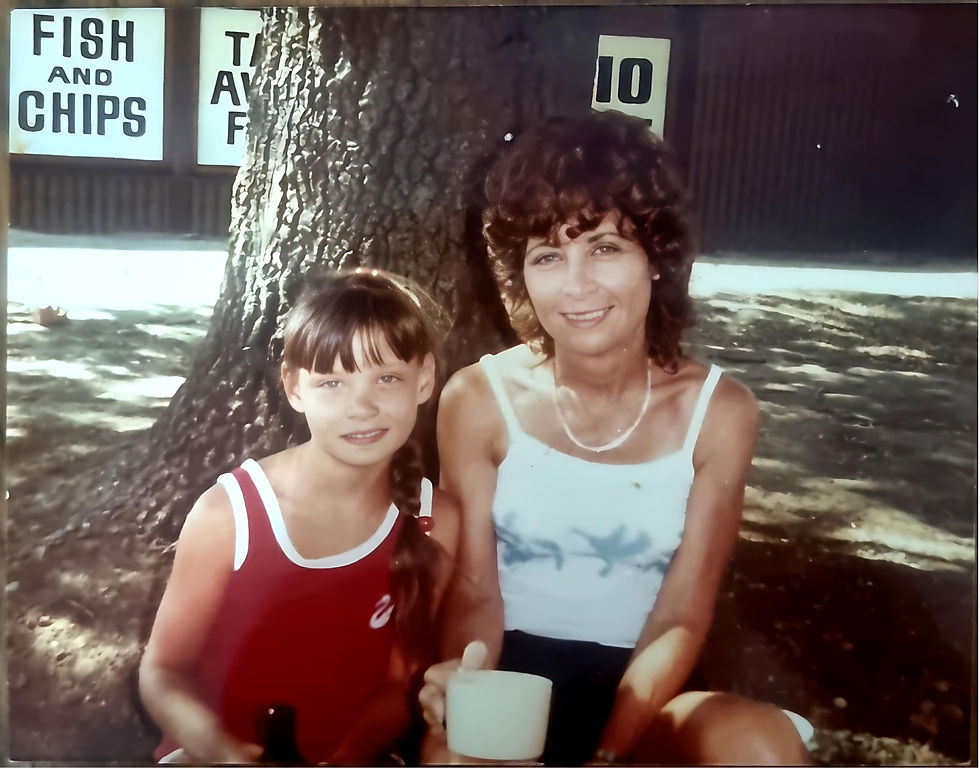
Proud, Not Bitter
Yes, her writing took her away from me in ways I couldn't comprehend at the time, and it felt lonely as a child, even as a teenager. There were afternoons when I knocked on her study door and heard a distant "Not now, love," as deadlines had to be met.
But I couldn't be prouder of what she built in that quiet study, with the large oak door. Every book she published was a testament to her refusal to quit.
Her Voice Lives On
And here's the bittersweet comfort of it all: she's never really left me. I hear her voice in every single one of her characters. Her quick wit. Her unexpected kindness. The little things she noticed that other people overlooked — a person's laughter, the colour of a stranger's shoes, the hint of disappointment in someone's farewell. The way my mother saw the world - with such a fierce love for life itself — shines through in everything she wrote.
Sometimes, when I'm writing, I pause and hear her in my head: "Is that the best you can do? Can you say it more clearly? Did you check the spelling?"
Growing up with an author as a mother wasn't the fairytale some might imagine. It was better. It was real. And I wouldn't trade a single solitary hour of it.
Comments